
Few people think of shovels as collectible items, yet some well-known figures have been drawn to their history and craftsmanship.
From antique digging tools to ornate ceremonial pieces, the stories behind these collections reveal how everyday objects can carry deep cultural and personal meaning.
Famous people who collected shovels often saw them as symbols of hard work, innovation, and transformation.
As we explore their collections, we uncover how these tools shaped industries, inspired art, and even sparked fortunes.
During the Gold Rush, for example, entrepreneurs like Levi Strauss built success not by mining gold but by supplying miners with durable goods, including shovels and workwear, as seen in accounts of the Gold Rush economy.
Others, such as the Ames family, turned shovel-making into a thriving business that helped build America’s railroads and cities, detailed in the Ames Shovel Company chronology.
Table of Contents
Notable Shovel Collectors Throughout History
Many collectors focused on tools tied to early American manufacturing, the gold rush era, and cultural symbolism.
Famous People Who Collected Shovels from the United States
In the United States, shovel collecting often connects to the country’s industrial roots.
Families like the Ames family of Massachusetts built their legacy around shovel production and preservation.
The Ames Shovel Company began in 1774 when John Ames forged iron-bladed shovels that replaced imported wooden ones.
Collectors in New England and the Midwest often preserve Ames-made tools for their craftsmanship and historical value.
Some display them in local museums or family collections that trace the growth of American industry.
Other private collectors focus on early agricultural and railway shovels, noting how these tools supported major construction projects such as canals and railroads.
The Ames family collection remains one of the best-documented examples, linking family history with national development.
| Notable U.S. Collectors | Focus | Location |
|---|---|---|
| Ames Family | Industrial and railroad shovels | Massachusetts |
| Local Historical Societies | Agricultural tools | Midwest |
| Private Tool Enthusiasts | Early iron and wood shovels | Northeast |
Influential Figures in Gold Mining
Shovel collecting also attracts those interested in gold mining history.
During the mid-1800s, miners in California and Alaska relied on shovels as essential tools for panning and digging.
Some historians and collectors now seek original mining shovels from this period.
A well-preserved gold mining shovel can show wear patterns that reveal how miners worked riverbeds and gravel pits.
Many museums and private owners identify and catalog such tools using guides like Antique Shovel Identification, which helps distinguish mining shovels from agricultural or military designs.
These collections document how simple hand tools supported one of the most transformative economic events in U.S. history.
Artists and Cultural Icons
Some artists and cultural figures collect shovels for their symbolic meaning rather than utility.
They see the shovel as a representation of labor, resilience, and progress.
Modern art collectors sometimes display antique or custom-made shovels as sculptural pieces.
These items often highlight craftsmanship from different eras, such as hand-forged steel blades or carved wooden handles.
In university archives and private galleries, collectors preserve shovels once used in major building projects or community works.
Displays like the College’s Rare Shovel Exhibit show how tools can bridge art, history, and local identity, reminding us that even a simple implement can carry deep cultural meaning.
Shovel Collecting and the Gold Rush Era
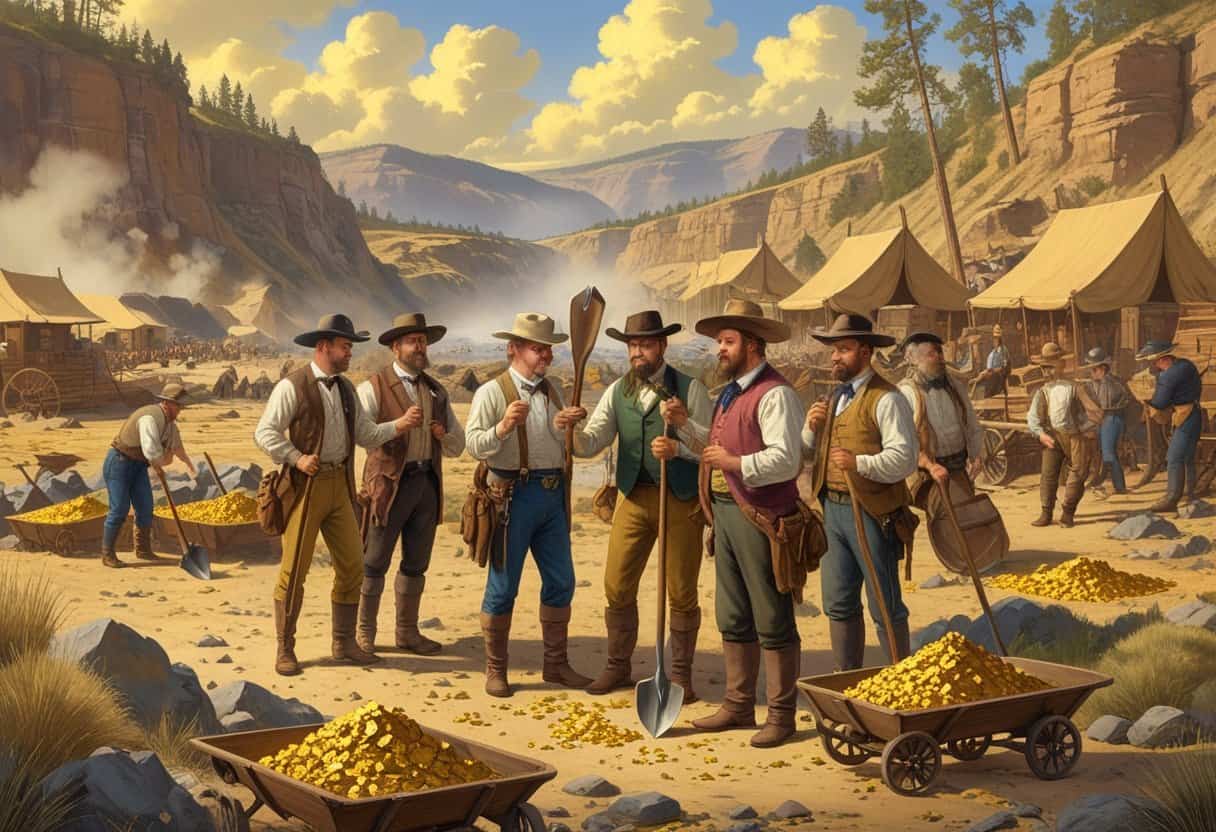
We often trace the origins of shovel collecting to the 19th-century gold mining boom in the United States, when tools became symbols of opportunity and survival.
Some entrepreneurs recognized the value of shovels not just as equipment but as instruments of economic power and innovation.
Sam Brannan and the California Gold Rush
During the California Gold Rush, Sam Brannan became one of the most well-known figures associated with shovel sales.
When gold was discovered at Sutter’s Mill in 1848, he quickly realized that selling tools would yield more profit than mining itself.
Brannan bought every pick, pan, and shovel he could find and resold them at huge markups in San Francisco.
According to Quote Investigator, this strategy inspired the saying, “When everyone is digging for gold, sell shovels.”
His approach reflected a practical truth: supplying miners was often more profitable than digging for gold.
Brannan’s store became an essential stop for prospectors heading west.
His success demonstrated how foresight and resource control could shape entire industries.
We can think of his shovel sales as an early form of infrastructure investment, where profits came from enabling others’ work rather than chasing uncertain riches.
The Role of Shovels in Mining Boomtowns
In mining boomtowns across the American West, shovels were more than simple tools—they were necessities that fueled local economies.
A shovel that cost one dollar before the rush could sell for ten times that amount, as noted in Daniel J. Werner’s analysis.
Merchants, blacksmiths, and suppliers built thriving businesses serving miners’ constant demand for equipment.
These towns often developed around trade hubs where tools, food, and lodging were exchanged at premium prices.
Table: Common Tools Sold During the Gold Rush
| Tool Type | Primary Use | Typical Markup |
|---|---|---|
| Shovels | Digging and moving earth | 5–10x |
| Pickaxes | Breaking rock | 4–8x |
| Pans | Separating gold from sediment | 3–6x |
Their trade created stable income streams and laid the groundwork for long-term settlement and commerce in the West.
Famous Shovel Collections and Their Stories
We can trace how shovels evolved from hand-forged iron tools to industrial equipment through both private and public collections.
These collections preserve rare examples that show how design and purpose changed with technology and society.
Private Collections and Museums
Several collectors have built notable assortments of antique and specialty shovels.
Some focus on early agricultural tools, while others collect military or mining models.
The Ames family, known for founding the Ames Shovel Works, kept records and examples of their products dating back to the 1700s.
Their preserved pieces reflect how American manufacturing grew alongside national expansion.
Museums often display these private holdings.
For instance, the old Ames factory archives—now part of Stonehill College—include payroll data, production notes, and hundreds of preserved models described in The Shovel As History.
These documents and tools help us understand how one company shaped both local industry and international projects like the Panama Canal.
Collectors also use comparison charts to track shovel types:
| Type | Period | Primary Use |
|---|---|---|
| Iron spade | 18th century | Farming |
| Steam shovel model | Early 1900s | Construction |
| Entrenching tool | 1940s | Military |
Each example connects craftsmanship with the needs of its time.
Historical Shovel Exhibits
Public exhibits highlight how shovels supported major engineering efforts.
Displays often feature early power shovels such as the Marion Power Shovel Company’s steam shovel used to excavate the Panama Canal.
These machines mark the shift from manual labor to mechanized earthmoving.
We also see antique displays that explore how shovel design influenced agriculture and warfare.
Exhibits like those described by Bosse Tools emphasize craftsmanship and cultural meaning.
Visitors can view worn handles, forged blades, and repair marks that reveal how people once worked the land.
Some historical societies include interactive features—for example:
- Demonstrations of early digging methods
- Side-by-side comparisons of hand tools and steam models
- Educational panels explaining material changes over centuries
These presentations help us appreciate how a simple tool became a key part of human progress.
Shovels as Artifacts: Cultural and Artistic Significance
We recognize shovels as more than tools for digging.
They serve as artifacts that reveal how societies express labor, transformation, and creativity through material culture.
Their role extends from practical use to symbolic meaning in art and media.
Pedro Reyes and Transformative Art
Mexican artist Pedro Reyes turned weapons into shovels for a project called Palas por Pistolas.
He melted down confiscated guns and reshaped them into tools used to plant trees.
This act linked destruction and renewal through a single object.
Each shovel represented both a past of conflict and a future of growth.
The project connected environmental action with social healing.
Reyes’s work demonstrates how everyday tools can gain cultural depth when reimagined.
By transforming the material and purpose of the shovel, he invited us to question how objects carry moral and emotional weight.
The result was both practical and symbolic—an artwork that literally planted change.
Shovels in Popular Culture
Shovels often appear in visual art, film, and literature as signs of labor, discovery, or endurance.
In ancient art, they symbolized sustenance and survival, as seen in depictions of agricultural life from early civilizations described in Cultural Symbolism of Shovels.
We also find them in modern museums, such as the Metropolitan Museum of Art’s collection, where ornate or ceremonial shovels reflect craftsmanship and ritual practice.
These artifacts show how societies valued the act of digging—whether for work, worship, or art.
In popular media, shovels often mark turning points in stories.
They uncover secrets, build foundations, or bury the past.
Across these uses, the shovel remains a quiet but powerful symbol of human effort and transformation.
The Legacy and Influence of Shovel Collectors
We recognize that shovel collectors help protect the physical record of industrial progress and shape how people value everyday tools.
Their efforts connect the evolution of labor, technology, and craftsmanship with modern interests in preservation and collecting.
Preservation of Industrial Heritage
By collecting and documenting antique shovels, we help preserve a key part of early manufacturing history.
The Ames family, for example, built a lasting industrial legacy through the Ames Shovel Works, which supplied tools for major projects like the Erie Canal and the Union Pacific Railroad.
Collectors often catalog maker’s marks, handle materials, and production methods.
This documentation gives historians and museums valuable data about tool design and trade networks.
We also maintain physical examples that show how design changed from hand-forged iron blades to factory-produced steel models.
Many of these tools would have been lost to corrosion or neglect without private collections.
Key preservation efforts include:
- Restoring damaged wooden handles and metal blades
- Archiving historical catalogs and company records
- Sharing exhibits through local museums and online galleries
Impact on Modern Collecting Communities
Shovel collectors influence how modern hobbyists view utilitarian objects as historical artifacts.
Online forums and museum groups, such as the Ames Shovel Museum at Stonehill College, show how community engagement can sustain interest in industrial heritage.
We exchange information about restoration methods, provenance, and valuation.
This collaboration encourages accuracy and transparency in the collecting world.
Many collectors also support educational programs that connect toolmaking to broader economic and social history.
By doing so, we bridge the gap between manual labor traditions and today’s mechanized industries.
Frequently Asked Questions
What role did shovels play in the California Gold Rush and who capitalized on this?
Shovels were essential for digging and sifting through soil to find gold.
Entrepreneurs like hardware merchants and toolmakers made consistent profits by selling these supplies to miners. The Ames company and others that specialized in durable tools became key suppliers during this period.
Can you name any entrepreneurs who profited from selling tools during major historical events?
The Ames family became famous for producing high-quality shovels used in major projects and wars. Their company, Ames Shovel Works, supplied tools for the Union Army and the building of the transcontinental railroad, earning both wealth and historical recognition.
How has the concept of ‘selling shovels’ been applied in modern industries like technology?
In modern times, technology firms that provide essential infrastructure—such as cloud computing, software tools, or semiconductor manufacturing—follow the same principle. They supply the tools that others use to build products and services, earning steady revenue regardless of which specific applications succeed.